
Unlearning Best Practices
21/10/2026
Authored By:


Unlearning Best Practices
Security’s core principles and standards rarely change, but the way we put them into practice does. In fact, some practices that were once considered best practices may now be doing more harm than good when it comes to your security posture. In this post, we’ll look at why these familiar approaches have become less effective, the risks they introduce to organizations, and what can be done to straighten your security posture.
SMS Two Factor Authentication
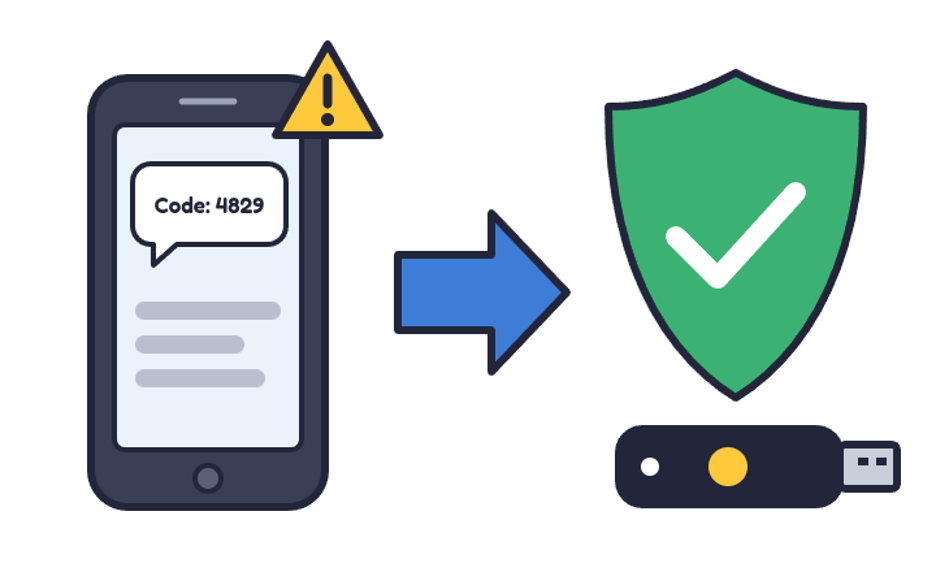
We all understand the need for multi-factor authentication (MFA) in a world of compromised passwords, and yet we rarely think about the issue of compromised phone access.
Attackers can defeat SMS MFA by swapping a SIM, redirecting phone traffic or phishing OPTs (one-time passwords). While none of these is trivial, none is beyond a determined attacker. SMS MFA provides a level of security, but it’s far from the level we need for all but the lowest risk authentication.
There are many alternatives to using SMS MFA, for example, we encourage the use of FIDO2 hardware security keys, or passkeys, and where those aren’t feasible, authenticator apps (somewhat susceptible to phishing attempts). These all offer significant upgrades in security over SMS MFA and are often not much more intrusive.
One final word: please do not disable SMS MFA until you have a more secure solution in place. While it is far from ideal, SMS MFA is generally better than no MFA at all.
Password Change Policies
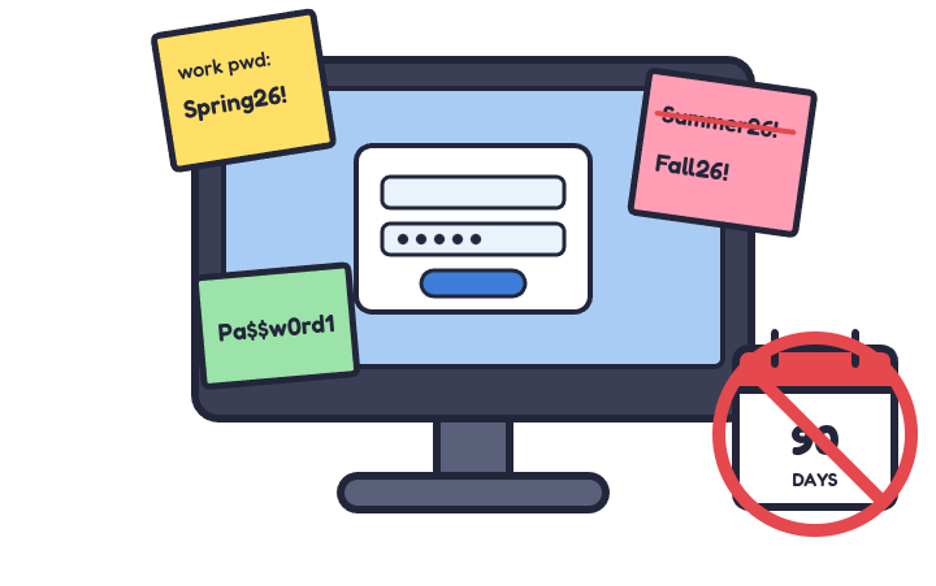
In what should come as a relief to most of us, it is time to retire frequent password change policies. They encourage bad practice, such as writing down passwords and sticking them to monitors, using passwords with dates in them, and many other bad approaches.
Good password hygiene requires a user to have unique passwords for every system. This prevents a single compromised password from giving access to all other systems, with users typically having well over 100 accounts with passwords. When we add to that requirement, the need for complex, long passwords with special characters, and frequent password changes, we are just setting ourselves and our users up for failure or extreme frustration. We know this, yet many password policies are implemented in the vacuum of assuming that this and only this password matters to the user. It was never going to work.
NIST Special Publication 800 – 63B recommends against both mandatory periodic changes and complex composition rules, instead encouraging using passkeys, password managers, long passphrases and most importantly, secure MFA, all of which offer greater security without encouraging the same bad practices. Additionally, it recommends screening passwords against previously breached passwords and dictionary lists, which helps address the risk of a compromised or simple password. That said, when there is evidence of a compromised credential, it is imperative that it is changed, and the identity is carefully verified before access is given.
Phishing Simulations with Punitive Training
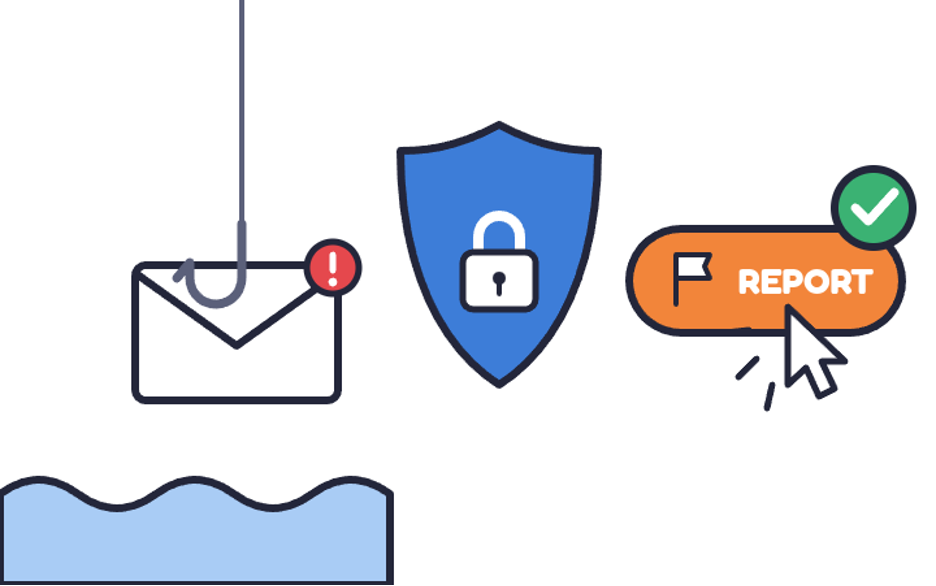
Punitive simulations breed resentment and discourage reporting, the very behavior you most need. Dropping them, and punitive training along with them, will be welcomed by users.
While it’s still valuable for employees to know the risks and telltale signs of phishing, it’s far more important to mitigate the risk at an institutional level. Technical controls such as email filtering, DMARC (Domain-based Message Authentication, Reporting & Conformance) and SPF (Sender Policy Framework) enforcement, and phishing-resistant MFA massively reduce exposure. Password managers won’t autofill credentials on a lookalike domain, which is a genuine and often overlooked anti-phishing benefit. Similarly, reporting phishing attempts should be simple, quick, and positively reinforced to ensure that attempts are caught early and addressed systematically rather than leaving the responsibility to the target of the phishing attack.
Conclusion
As the threat landscape evolves, so must we, and that sometimes means moving on from systems and policies that were expensive to implement both in terms of cost and organizational change. The good news is that the changes needed are well understood, and often easier on the end user, with relatively few barriers to implementation. If you want to modernize your security posture, we at Mara Consulting are always ready to discuss how we can aid you in that journey.